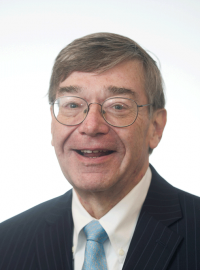
‘No mas’: Democratic lawyer Adam Gentle takes on Diaz-Balart in Florida’s 25th District

Democratic challenger Adam Gentle announces his candidacy for Congress against the backdrop of the Everglades. (Image: Adam Gentle for Congress campaign)

June 1, 2021 by David Silverberg

–Updated June 2 with inclusion of Golden Gate in district description

Last year Rep. Mario Diaz-Balart (R-25-Fla.) ran for re-election unopposed and—no surprise—won.

That jolted lawyer Adam Gentle.

“He’s an active threat to democracy,” Gentle says of the sitting congressman. “He voted to overturn the election. He’s not even protecting the fundamental form of our government. Having him run unopposed is unacceptable.”

On Monday, May 24, Gentle announced he was challenging Diaz-Balart to represent the 25th District in Congress.

At stake, says Gentle, is nothing less than the fate of democracy.

“This is an inflection point in our history,” he stated in his campaign announcement, issued in both English and Spanish. “Our failure to act now to address the causes of the January 6th insurrection will lead this nation down the same path as Venezuela, Nicaragua and Cuba.”

The 25th’s constituency knows whereof he speaks.

The District

The Florida 25th Congressional District.

The 25th District stretches from roughly Route 75 in Collier County and Golden Gate in the west, includes all of Hendry County and the towns of LaBelle, Clewiston, Immokalee and Ave Maria in its center to Hialeah and Doral in the east.

Of the 796,422 people in the District, 76 percent are Hispanic. While there are communities of immigrants from Nicaragua and Venezuela, 44 percent are Cuban-American, the highest percentage in the country. It’s one reason Diaz-Balart has held the seat since he took office in 2003.

But that doesn’t faze Gentle. “The vast majority of voters are bilingual,” he says. “I take it as an opportunity to connect.” He said he had good results when he addressed a group of Cuban American students. They were open to his message and moreover, “they told me that in their lives they had never had a Democratic candidate open a street office in Hialeah,” (104 Hialeah Dr.) where most Cuban-Americans are concentrated.

Gentle also believes that “kitchen-table issues” count for much more than ethnicity, particularly healthcare. As he puts it, “one party is doing much more for healthcare, while the other one just wants to get rid of it.”

The 25th District has a very high number of enrollees in the Affordable Care Act, according to Gentle. It’s a program that was particularly important to people during the worst months of the COVID pandemic—and as Gentle points out, “meanwhile, the current representative tried to eliminate it. Under this administration [the Biden administration] he’s tried to do it.”

Gentle believes that healthcare is a fundamental human right and no one should be forced to choose between paying for medications and affording food. Good healthcare is also important for safeguarding the people of the district from COVID and ensuring that everyone gets vaccinated.

Especially after the COVID pandemic he sees health as important for much more than just a basic commitment to wellbeing because, in his view, “healthy people create healthy democracies.”

But only the living can stay healthy and with the spate of gun violence in the country, life is at risk from random shootings. It all came home to the 25th District shortly after midnight on Saturday, May 29. Hialeah was rocked when three gunmen blasted a gathering there, killing two people and wounding over 20.

Three gunmen exit a car in Hialeah in a surveillance camera video released by police.

“After hearing the news out of Hialeah this morning, my heart is breaking for the families of those involved,” Gentle said when the news broke. “I’m praying for a swift recovery for those in the hospital. We must do more to help protect our communities from these needless acts of violence.”

As part of his platform Gentle was already calling for common-sense background checks for gun purchases and red flag laws to prevent the unfit from accessing guns. He supports a 14-day waiting period before gun purchases, investing in mental health care services and banning assault weapons with high capacity magazines.

As of this writing, Diaz-Balart hadn’t issued a statement on the shooting of any kind or even a tweet.

The candidate

Originally hailing from Essexville, Mich., Gentle is a 39-year-old lawyer whose career has taken him all over the world.

A graduate of Columbia University in New York and George Washington University in Washington, DC, where he earned his juris doctor degree, he worked for four years with the law firm of Baker Mackenzie in Washington.

Initially, Gentle pursued a career in the arts, traveling to Los Angeles, Calif., within days of his high school graduation and working with The Young Americans, a charitable group that seeks to promote international goodwill and understanding through music and the performance. It was an experience, he says, that exposed him to numerous cultures and peoples.

That international experience helped him in his law practice where he specialized in helping American companies comply with the Foreign Corrupt Practices Act. That law prohibits American companies from engaging in bribery or other forms of corruption when doing business overseas. Gentle gained experience in fighting corruption—and keeping American firms out of trouble—in countries like Russia, China, India and areas like Central Asia.

“Corruption,” he says, “is a force that destroys democracy.”

His experience, from running a paper route as a student to his work as a lawyer, made him a confirmed capitalist and determined to support business in the district. “It’s essential that we take action to protect our small businesses, our environment and our tourism industry,” he stated when he announced his candidacy.

Having seen real socialism overseas he’s dismissive of the favorite Republican tactic of smearing any opponent with the “socialist” label. “They’ve just weaponized words.  I’m a capitalist who supports the free market,” he says.

He’s also a democrat with both a small and big D, having seen autocratic governments elsewhere.  He was horrified by the mob attack on the US Capitol on Jan. 6 and Diaz-Balart’s support for Donald Trump’s attempt to overturn the results of a legally conducted and fairly counted election.

“I won’t stand on the sidelines and watch elected officials repeat proven lies to further their corrupt scheme,” he says. “They’ve tested our Constitution and the will of the American people. No mas.”

Gentle is openly gay and married to a Portuguese-speaking husband. He doesn’t see this as an impediment to his candidacy and he’s unafraid of his opponent trying to use it against him.

“I think if my being gay affects my performance in this race it will say a lot more about the other side’s attitudes than about anyone’s way of voting,” he says. “I was born at a time when I couldn’t imagine the life I have today. I have rights and privileges that I didn’t have when I was born. I think that unites us rather than divides us.”

The road ahead

Like all Florida Democrats, Gentle has a tough path to victory. The district is rated R+8 by the Cook Political Report Partisan Voting Index, meaning that it’s eight times more Republican than the national average.

Moreover, Trump made serious inroads into its population in the last election. In 2016 Trump barely edged out Hillary Clinton in the district, 49.6 percent to 47.4 percent. In 2020 he extended his reach, defeating Biden there by 61.4 percent to 37.9 percent.

But Gentle is determined and he’s not without resources. He is already fundraising for the long race ahead. He has a strong and knowledgeable senior advisor in Evelyn Pervez Vadia, an experienced political consultant and strategist who specializes in combating disinformation and reaching Latino voters.

He is paying attention to the western side of the district, which is often overlooked by Diaz-Balart. In February he attended a black heritage festival in LaBelle, the first time a candidate had appeared there. “Mario Diaz-Balart has never shown up there,” he pointed out. “You have to show people that you care about them.”

He regards the sugar industry with skepticism but not outright hostility: “My main concern with any industry is that taxpayers are not left holding the bag for their practices. If big sugar is polluting then it has to be cleaned up. We do need to make sure that the proper parties are held responsible.”

He supports the Comprehensive Everglades Restoration Plan and its funding, which he notes “needs to be reviewed constantly.”

When it comes to immigration, Gentle promotes the idea of American Migration Service Centers to prevent unmanageable migrant influxes. These would be attached to US consulates and embassies so that potential immigrants could be treated in an orderly and legal way. He argues that such centers would provide local jobs while freeing up border security resources so that border agents can concentrate on real threats like smuggling and crime.

Above all, Gentle is convinced that the district’s population is ready for a change, especially given the assault on democracy that he believes Diaz-Balart aided and abetted with his vote.

“It’s a fact that my opportunities and privileges have allowed me to travel all around the world both personally and professionally. I think there’s something awesome about the 25th and I’m excited to engage with different cultures and ways of life,” he says.

“My number one focus in Florida is that we’re protecting people to make sure they have food on the table and they’re treated with dignity and paid a living wage and have access to healthcare. This country has turned away from uncomfortable aspects of its life that we need to address. We need to get really honest, really fast.”

The only promise he makes is one that’s both hard and easy to fulfill at the same time: “I will never vote according to party dictates,” he says. “I will always vote in the interests of the people I represent.”

Visit Adam Gentle’s website here.

Adam Gentle’s announcement video can be viewed here.

Liberty lives in light

© 2021 by David Silverberg

Water warning: The politics of red tide, algae and lessons from the Big Bloom

Demonstrators demanding action to combat red tide protest a campaign appearance by then-Gov. Rick Scott in Venice, Fla., in 2018. (Image: Indivisble SWFL)

May 26, 2021 by David Silverberg

–Updated May 27 with new link to Stafford Act

This summer Southwest Florida seems headed for a Big Bloom on the order of 2018’s disastrous summer.

Blue-green algae is flowing down the Caloosahatchee River as a result of Lake Okeechobee water releases.

Red tide is blooming in the Gulf of Mexico. This year there’s the added threat of blooms as a result of the dumping of millions of gallons of polluted water to relieve pressure on the Piney Point wastewater pond, or “stack” near Tampa. This has likely fed blooms in that area that could drift southward.

People living along the Caloosahatchee are already breathing the toxins and smelling the stench. Red tide alerts have been issued along the beaches.

All disasters—and harmful algal blooms (HABs) are disasters just as much as hurricanes—have political implications. What will be the political impact if there’s a big bloom this year? Were any lessons learned from 2018 and are they being applied? How will Southwest Florida’s politicians react this time around? And can anything be done differently—and better?

Recapping 2018

In 2018 Southwest Florida experienced an extremely heavy concentration of river algae and Gulf red tide at the same time. It went on for roughly a year, first appearing in October 2017 and then intensifying and peaking in the summer of 2018, finally breaking up in the late fall.

Red tide is naturally occurring in the Gulf and had appeared and broken up before without any major impact on the region. River algal blooms had been minor inconveniences. This was not expected to be any different.

But these blooms lingered and intensified. In contrast to 2017, which had seen Hurricane Irma and lesser storms in the region, there were no major storms in 2018, which may have allowed the blooms to fester. The extremely heavy rainfall of 2017 may have been a contributing factor. The precise relationship between tropical storms and algal blooms remains unclear.

The Big Bloom didn’t just ruin a few peoples’ beach time or boat trips; it was significantly damaging to the area’s economy. It became a national story that dampened tourism and reduced hotel occupancy. Based on surveys filled out by area businesses, 152 or 92 percent of surveyed business owners stated they had lost business due to the red tide in the Gulf. Of them, 126 or 76 percent stated they had lost $500,000 or more. Others estimated losses between $20,000 and $2,000.

The bloom was also a serious health hazard to those who lived along waterways and had no means of escape.

Authorities at all levels were slow to recognize the blooms as a disaster or their magnitude and respond in any way. In addition, it was an election year, so elected officials were distracted by their need to campaign.

At the federal level, Donald Trump was president so environmental issues were ignored or had a low priority.

Then-Gov. Rick Scott (R) was running for the Senate. He had been a strenuous denier of climate change and avoided dealing with environmental questions. Scott banished the term “climate change” from the official vocabulary in Florida state government.

Then-Rep. Francis Rooney, representing the area from Cape Coral to Marco Island in Congress, was largely engaged in supporting Scott while running his own re-election campaign, so he was distracted as well.

Furthermore, the area’s elected officials, media and a good portion of the politically active population simply denied or ignored the impact of overall climate change on the region and its possible role in the disaster.

While the bloom was at its worst in the summer and early fall of 2018, officials were largely helpless. No official edict or action could stop the bloom. While the voters would not allow the incumbent candidates to completely ignore it, candidates did their best to minimize it or distract voters away from it. Late in the crisis Scott declared an emergency and made a paltry $13 million available to the affected businesses.

After the election was over, Rooney took the lead in attempting some kind of response. In May 2019 he pulled together a conference of all the affected region’s elected officials and four relevant federal agencies to attempt a discussion of the HABs and future response. It was briefly attended by the new governor, Ron DeSantis (R), who in contrast to Scott, made environmental issues a priority.

Unfortunately, the conference, held at the Emergent Technologies Institute of Florida Gulf Coast University (FGCU), was closed to the public, so the full extent of its discussions, conclusions and decisions will never be known publicly.

Rooney did report out some of the discussion in an op-ed that ran in local newspapers under different titles.

After establishing that federal response to HABs was inadequate and uncoordinated with local authorities, participants concluded that the relevant federal agencies needed to be more aware of HABs as potential disasters and keep local jurisdictions informed of their formation and potential impacts. In addition to agencies that have direct, line responsibility in the event of a HAB like the National Oceanographic and Atmospheric Administration (NOAA), the Environmental Protection Agency (EPA) and the Centers for Disease Control and Prevention (CDC), other agencies like the Federal Emergency Management Agency, the Small Business Administration and the Department of Housing and Urban Development had roles to play.

For his part Rooney introduced two pieces of legislation: one to classify HABs as major national disasters so that local businesses and residents would get disaster relief, and another to ensure that HAB monitoring and response were not interrupted by government shutdowns. Neither bill passed into law during the 116th Congress.

He also introduced changes to help with HABs to the Water Resources Development Act (WRDA), the massive, comprehensive congressional bill that covers all water infrastructure, which was signed into law at the very end of 2020.

What’s different in 2021

There has been considerable change on many fronts since the Big Bloom of 2018 that may help with the response if there’s a big bloom this year.

Monitoring, reporting and information

A major, obvious change from 2018 is the amount of information available to the public on the state of algal blooms in general, which also translates into more information about local blooms. This is a vast improvement over 2018 when such information was either unavailable or fragmentary.

Government agencies and jurisdictions established websites on HABs after 2018.

(A full list of public links regarding Southwest Florida HABs is at the end of this article.)

This year there are also mechanisms for local jurisdictions to share information with federal agencies, enabling much better monitoring of HAB outbreaks and providing a much more comprehensive view of both national and local situations than was available in 2018.

Gubernatorial and state involvement

In 2018 then-Gov. Rick Scott’s hostility to environmental issues and solutions was infamous and came back to bite him during the Big Bloom.

Gov. Ron DeSantis got off to an early and very popular start when he took office in 2019. He dropped the hostility to science, creating the position of Chief Science Officer. He boosted funding for Everglades restoration and dismissed the South Florida Water Management District Board for a sweetheart lease with the sugar industry. He also dropped Scott’s prohibition on using the term “climate change.”

The DeSantis administration also established Protecting Florida Together, a Web portal for monitoring and communicating environmental and water quality information to the public. While heavily promoting the governor, it provides useful and presumably accurate data on the state of algal blooms and red tide.

This alteration in gubernatorial attitude is a sea change from 2018. Simply having a state administration that is aware of environmental issues can provide some public confidence that solutions are being sought, which was not previously the case.

Federal expertise

Another sea change was the transition from Donald Trump to Joe Biden, who ran a campaign that took environmentally-friendly positions on major issues. Since his inauguration Biden has made major efforts to boost environmentally-friendly policies and combat climate change.

Biden’s climate team is particularly expert in water issues. Michael Regan, the current EPA administrator, is especially familiar with HABs, having confronted a major bloom in North Carolina, where he served as secretary of the Department of Environmental Quality. In July 2019 he canoed the state’s rivers to see the bloom for himself.

If this year’s algal bloom rises to the level of EPA administrator for action, Southwest Florida officials will be working with an EPA head who intimately knows and understands the problem.

Upgrading and modernizing US drinking, wastewater and stormwater systems is a major aspect of Biden’s infrastructure proposal, the American Jobs Plan. While it may not directly impact this year’s blooms, over the longer term it will address the underlying conditions that lead to the blooms, hopefully mitigating or eliminating them. However, it is still in negotiation between the White House and congressional Republicans.

Locally, Rep. Byron Donalds (R-19-Fla.) has already attacked the plan as simply being the Green New Deal in disguise and for proposing new taxes on corporations and the extremely wealthy to pay for it.

Legislation

It is on the legislative front that there has been the least amount of progress in coping with HABs in general or this year’s potential bloom in particular.

In 2019 then-Rep. Francis Rooney proposed two pieces of legislation to deal with HABs: The most important one was the Protecting Local Communities from Harmful Algal Blooms Act, which consisted of a three-word amendment to The Robert T. Stafford Disaster Relief and Emergency Assistance Act, which would add HABs to the official roster of major disasters eligible for federal aid. This would make Southwest Florida businesses and residents eligible for a variety of federal support if businesses or livelihoods are damaged by a bloom.

Rooney’s bill went nowhere during his term in office and there is no renewal in the offing.

The second proposal was the Harmful Algal Bloom Essential Forecasting Act, which would ensure that HAB monitoring by federal agencies would continue despite any government shutdowns, a situation less urgent than under Donald Trump. That bill too went nowhere during Rooney’s tenure. It was reintroduced by Donalds on March 17 as House Resolution 1954 and as of today it remains in committee awaiting consideration.

Legislation can’t stop a bloom while it’s happening—but it can mitigate the harm from one and protect people from indirect effects in the future. However, there has been no progress on this front to date and Southwest Florida will go into a 2021 bloom as unprotected legislatively as in 2018.

Analysis: Progress and challenges

Make no mistake: there has been progress on coping with algal blooms since 2018.

There’s been much more research into the nature and causes of blooms and efforts to mitigate their causes, like Lake Okeechobee pollution and phosphates flowing into local waterways.

A big step forward was the founding of the Water School at FGCU on March 22, 2019. This is a major addition to the university, dedicated to researching and examining all aspects of water. While still being developed it’s in a position to make a major contribution to fighting the blooms this year, providing timely and detailed information to officials at all levels and the public at large

In addition to the governmental and legislative measures, localities have been experimenting with technological fixes to contain or eliminate river algae. Public health authorities are far more aware of the health impacts of algal toxins and their dangers.

Even if this year’s bloom blossoms into a crisis on the order of 2018’s, politicians now have precedents to inform their behavior, unlike the example of Rick Scott, who as governor and a Senate candidate fled from red tide protesters in Venice during a campaign swing.

But the lessons of the past don’t just apply to political campaigning and the quest for higher office; they also have to assist in managing the disaster itself.

As a general rule, disasters favor incumbents. A sitting governor, mayor or public official can be seen as vigorous and commanding if he or she appears to take charge. But an official also has to deliver real results. People may not remember a good disaster response but they never forget a bad one.

For businesses, that means being assisted with disaster recovery funding, which is why amending the Stafford Act is so important.

And perhaps the greatest lessons to be taken away from the 2018 Big Bloom are the intangible ones: that big blooms are dangerous; they’re damaging; they really hurt people and businesses; they can be economically devastating; they need to be taken as seriously as any hurricane; they need to be monitored and, to as great an extent as possible, countered early; and all jurisdictions have to coordinate and cooperate in their responses.

Also, algal blooms, like the pandemic, don’t discriminate between political parties or persuasions. Algal toxins and their consequences affect everyone equally.

So Southwest Florida is somewhat better prepared and knowledgeable than it was in 2018 if there’s a big bloom this year.

But as always with disaster management, there’s still a long way to go.


Further resources:

Federal:

NOAA (Current conditions):

CDC (General information): Harmful Algal Bloom-Associated Illness

EPA (General information)

State:

Local:

Lee County

  • While Lee County has a red tide and algae bloom status website, it is badly out of date—in fact, it seems to have frozen in 2018 and refers to Rick Scott as governor. Nonetheless, for the record, it is at: https://www.leegov.com/waterqualityinfo.

Cape Coral

Collier County

City of Naples

  • While the Naples City website links to the Collier County information, it also provides a phone number for recorded updates on conditions in Collier County: (239) 252-2591.

Non-Profit, non-governmental advocacy organizations

For a deeper dive into the political aspects of disaster response see the book Masters of Disaster: The Political and Leadership Lessons of America’s Greatest Disasters on Amazon Kindle.

Liberty lives in light

©2021 by David Silverberg

The Donalds Dossier commentary: Rhetoric, reality and law enforcement

Rep. Byron Donalds addresses the US House on the occasion of National Police Week. (Image: C-Span)

May 21, 2021 by David Silverberg

Two recent votes by Rep. Byron Donalds (R-19-Fla.) belie his purported support for the nation’s law enforcement officers.

Donalds voted against both creation of a bipartisan commission to investigate the events of Jan. 6 and against supplemental appropriations to improve Capitol security.

On May 12, Donalds joined other members of Congress to acknowledge National Police Week and honor the men and women of law enforcement.

Recalling a time when he was robbed at gunpoint at the age of 16 and the police responded to his call, Donalds made a 2-minute, 19-second floor speech acknowledging the importance of their role in society.

“The police are the ones in our communities. They patrol the streets. They try to keep our neighborhoods safe. They are the ones who put their lives on the line every single day, who may not go home. They are the ones who are the pillars of every community in our great country,” he said.

“So on National Police Week, the number one thing we need to learn not just on this specific week, but in every week, is that we need to show them the necessary honor and respect that they deserve.”

Donalds then had the opportunity to demonstrate that honor and respect with two subsequent votes.

The first was a vote to establish a bipartisan commission to investigate the Jan. 6 attack on the Capitol, an attack by what Donalds called at the time “lawless vigilantes” engaged in “thuggery.” He later characterized the rioters as “a bunch of lunatics.”

While some Republican members of Congress downplayed the severity of the attack, an anonymous letter by Capitol Police officers was sent to House members stating that “It is inconceivable that some of the Members we protect, would downplay the events of January 6th. Member safety was dependent upon the heroic actions of USCP [US Capitol Police]. It is a privileged assumption for Members to have the point of view that ‘It wasn’t that bad,’” the letter stated. “That privilege exists because the brave men and women of the USCP protected you, the Members.”

Though allegedly supported by 40 members of the Capitol Police, their support could not be independently verified. The Capitol Police disavowed the letter as an official communication.

Nonetheless, on Wednesday, May 19, the House voted by 252 to 175 to establish the commission.

Donalds, however, voted against the bill. (Also voting against it were Southwest Florida’s two other representatives, Reps. Greg Steube (R-17-Fla.) and Mario Diaz-Balart (R-25-Fla.).

Yesterday, May 20, Donalds had another opportunity to show his support for law enforcement by voting for a $1.9 billion bill to improve security around the Capitol. The vote on that was 213 to 212.

Donalds voted against that bill too, along with the rest of the Southwest Florida delegation.

Commentary: Putting the money where your mouth is

“Mr. Speaker,” Donalds said in his May 12 floor statement, “we have all seen the videos that get thrown in front of us. We have seen the handful of acts that all Americans find distasteful”—his reference, apparently, to the wholesale assault on the Capitol in which he was speaking and the attempt to kill the lawmakers inside and lynch the Vice President of the United States.

He continued: “But the uniform, that badge, the officers that serve every day, they serve our communities with honor and with distinction. So it is really my pleasure and my honor to honor all those officers, including the ones in this very Capitol, who protect us every single day.”

Apparently Donalds’ rhetorical support did not extend enough to honor them by investigating the past attack upon them and giving them the resources and funding they need to prevent a similar attack again.

Nonetheless, the men and women of law enforcement continue protect Donalds, his fellow lawmakers and the public in general from the “thugs” and “lunatics”—Donalds’ terms—who remain at large.

Both bills have now gone to the Senate where they face uncertain futures.

Liberty lives in light

©2021 by David Silverberg

Donalds, Steube join 62 Republicans opposing anti-hate crimes bill; Diaz-Balart supports it

The US Capitol.

May 18, 2021 by David Silverberg

Southwest Florida Reps. Byron Donalds (R-19-Fla.) and Greg Steube (R-17-Fla.) were two of only 62 members of the US House of Representatives to oppose passage of a bill today calling for aggressive investigation and prosecution of hate crimes, especially those against Asian Americans and Pacific Islanders (AAPI).

Rep. Mario Diaz-Balart (R-25-Fla.) voted in favor of the bill.

The COVID-19 Hate Crimes Act (Senate 937), passed the House by an overwhelming vote of 364 to 62. Support for the bill was heavily bipartisan, with all Democrats and 147 Republicans voting for it.  The 62 opponents were all Republicans.

It passed the Senate on April 22 by a vote of 94 to 1, with only Sen. Josh Hawley (R-Mo.) opposing it. Both of Florida’s Republican senators, Rick Scott and Marco Rubio, voted for it.

The bill now goes to President Joe Biden for signature.

The bill was prompted by a spate of blatant, unprovoked violent hate crimes against Asian Americans fueled in large part by President Donald Trump’s vitriol against China and Chinese during the worst months of the pandemic.

It calls for the Department of Justice (DoJ) to prioritize and expedite investigations of anti-AAPI hate crimes and to issue guidance to local and state law enforcement agencies to do the same. It provides for better data collection on hate crimes, improves education related to them and creates financial grants to raise awareness, prevent and respond to them.

The COVID-19 Hate Crimes Act was introduced on March 23 by Sen. Mazie Hirono (D-Hawaii). “Today, Congress sends a powerful, united message that we stand in solidarity with the AAPI community as we confront an epidemic of racism and intolerance,” she stated following the House passage.

Neither Donalds, Steube nor Diaz-Balart issued statements explaining their votes in the immediate wake of the the bill’s passage.

Liberty lives in light

© 2021 by David Silverberg

It’s not your imagination: There really is a MAGA migration to Florida

Gingrich move to Naples is just latest addition to rightist roster

A satirical map of the MAGA migration to the Sunshine State. (Art: Author)

May 17, 2021 by David Silverberg

Updated May 18 with current valuation of Sen. Rick Scott’s home.

If you had the impression that all the debris and detritus of the Trump years was drifting southward to Florida—you’d be right.

The latest move is by Newt and Callista Gingrich, who on May 3 purchased a property in Naples’ tony Quail West development and will be moving there permanently in September.

Newt and Callista Gingrich announce their Florida move on Twitter. (Photo: Twitter)

They’re just part of the Trumps, Trumpsters and assorted Trumpers migrating to the swampy warmth of Florida south of Interstate 4.

Of course, the real lodestar for all this is Donald Trump himself, the loser of the 2020 election, who retreated to his luxurious lair of Mar-a-Lago in Palm Beach following his failed January 6th attempt to overturn the US government and cancel the election. Trump became a full-time Florida resident in September 2019 and officially tweeted the change on Nov. 1 of that year.

“…Despite the fact that I pay millions of dollars in city, state and local taxes each year, I have been treated very badly by the political leaders of both the city and state. Few have been treated worse,” he complained of New York. At the time he was under pressure from New York authorities investigating a variety of suspected misbehavior. (That pressure may turn into indictments any day now, his Florida residence notwithstanding.)

Along with the Former Guy himself came the family Trumps, who have settled along the east coast of the peninsula. Daughter Ivanka Trump and her husband Jared Kushner have purchased a lot for $32 million on Miami’s exclusive Indian Creek Island, known as the “Billionaires Bunker.”

Further north, Don Jr. and his girlfriend Kimberly Guilfoyle, purchased two waterfront homes in Jupiter’s Admiral’s Cove, another exclusive high-end enclave. The main house, 492 Mariner Drive, listed for $11 million. Next door, Guilfoyle was planning to purchase a $9.5 million mansion for her family, according to The Palm Beach Post.

Marla Maples shows off her new Florida driver’s license, taking care to conceal her address. (Photo: Instagram)

It’s not only the current family coming south: Trump ex-spouse Marla Maples has settled in Miami, joining her daughter Tiffany who already resides there with her fiancée, Michael Boulos. In March, Marla posted a photo on Instagram of her coyly displaying a Florida driver’s license.

Interestingly, while Trump & Family settle into extravagant and expensive digs, lesser Trumpsters who served his campaign or administration are pleading poverty and penury, either because they’re out of the graces of the Orange One, or because they’re facing the wrath of law enforcement.

Fort Lauderdale is home to Roger Stone, political trickster, lobbyist and consultant. Stone was arrested there on Jan. 25, 2019 and charged with witness tampering, obstructing an official proceeding, and five counts of making false statements during Robert Mueller’s investigation of Russian collusion. He was convicted of seven felonies and sentenced to 40 months in prison. Trump first commuted his sentence and then pardoned him altogether just before leaving office. However, this past April 16, the Internal Revenue Service (IRS) sued Stone for $2 million in back taxes.

Stone pleaded poverty: “The Internal Revenue Service is well aware of the fact that my three-year battle for freedom against the corrupted Mueller investigation has left me destitute,” Stone told The Associated Press. “They’re well aware that I have no assets and that their lawsuit is politically motivated. It’s particularly interesting that my tax attorneys were not told of this action, filed at close of business on a Friday. The American people will learn, in court, that I am on the verge of bankruptcy and that there are no assets for the government to take.”

That’s not the IRS view, which holds that Stone and his wife used a commercial front to “shield their personal income from enforced collection” and support a “lavish lifestyle.”

According to the IRS filing: “Despite notice and demand for payment, Roger and Nydia Stone have failed and refused to pay the entire amount of the liabilities.”

The drama will play out in a Fort Lauderdale courtroom over the coming months.

Also in Fort Lauderdale, Brad Parscale, who touts himself as “an advertising legend,” served as Trump’s campaign manager for 897 days before a major Trump rally he organized in June 2020 in Tulsa, Oklahoma failed spectacularly.

Brad Parscale’s former Ft. Lauderdale home. (Photo: Miami MLS)

During his Trump time, Parscale was riding high with a salary of $15,000 a month but with seeming use of much more. Under Parscale Properties LLC, he invested in real estate around Fort Lauderdale including a $2.4 million waterfront home for himself. Over the course of a few months he also purchased $300,000 in luxury cars.

But apparently he wasn’t feeling well after his fall from grace. On Sept. 27, 2020 his girlfriend called Fort Lauderdale police to say that he was waving a gun and threatening both her and himself. Parscale’s takedown by police in his driveway was videotaped and widely broadcast. He sold his main house shortly after his arrest and the following day listed a townhome he also owned.

In March 2021, Pascale announced that he had formed a new super political action committee (PAC) called American Greatness PAC and a non-profit American Greatness Fund, which promotes what it calls the Election Integrity Alliance to “unite groups and efforts across the nation focused on combating election fraud.” It will fund state legislators and activists “on challenges to free and fair elections.”

Donors will no doubt be reassured by Parscale’s proven record of handling money in the past.

The other side of Alligator Alley

In an essay published in The Washington Post this past January, humorist Dave Barry put Florida’s east and west coasts into perspective:

“…Miami, where I live, is directly across the Everglades from Naples, only about 100 miles as the crow flies, which the crow had better do because if it lands it will be eaten by a Burmese python,” he wrote. “But despite their proximity, the two cities, because of unfortunate stereotypes, view each other negatively. Miami views Naples as a boring, retiree-infested backwater where the height of wild nightlife is ordering a second round of breadsticks at the Olive Garden. Naples views Miami as an insane urban hellscape whose residents celebrate every occasion, including Valentine’s Day, with gunfire.

“For the record, both of these unfortunate stereotypes are 100 percent accurate.”

Perhaps it was this boringness—or viewed another way, the peace and quiet—of the Gulf coast that first drew Indiana native Mike Pence to Sanibel Island. During his time as Trump’s vice president, Pence would occasionally vacation at an undisclosed location there. Whether his trips continue in the future or he settles there permanently, only Pence himself knows.

For four years Pence was an unfailingly loyal and servile wingman to Donald Trump—who rewarded him by inciting a murderous mob to try to lynch him on Jan. 6.

Also on the Gulf coast is the longtime home of former Florida governor and current senator Rick Scott, whose beachfront home at 3150 Gordon Dr., Naples, is estimated to be worth over $30 million as it awaits climate change-driven sea level rise to wash it into the Gulf.

Naples, with a picturesque downtown and beautiful beaches, has been a minor haven for right-wing pundits and performers for some time.

Fox News commentator Sean Hannity bought a $4.75 million penthouse in a luxury high-rise condo called Moraya Bay in 2009. It was one element of his real estate empire that reportedly includes as many as 900 properties around the country. Hannity sold that penthouse for $5.7 million in December 2020 and has reportedly moved on to Florida’s east coast.

Among the Fox news readers, Brett Baier also has a condo in Naples, possibly in Moraya Bay.

Also in Naples, rocker Ted Nugent, better known at this point for his extreme political views than his music, has long been an occasional seasonal resident. Nugent announced on April 19 that he had contracted COVID-19 a week after performing at Seed to Table, a defiantly COVID-denying, anti-masking market in North Naples.

None of these celebrities made much of an impression on the local community, either showing up on the streets, in shops or in the pages of slick hometown lifestyle magazines as charitable donors.

To the north of Sanibel, Fox News pundit Tucker Carlson occasionally visits the $2.9 million, 3,000-square-foot plus, single-level modernist home he purchased in 2020 on Gasparilla Island, one of the Gulf shore’s many islands.

Newt and Callista Gingrich are the latest additions to the Gulf shore, scheduled to move permanently to Naples in September.

Newt, of course, was Speaker of the US House of Representatives from 1995 until he was ousted in 1999. Callista is just back from a stint as US ambassador to the Vatican’s Holy See.

Her presence will give Naples two former Vatican ambassadors, given the presence of Francis Rooney, who served in that capacity from 2005 to 2008 before representing the district in Congress from 2016 to 2020.

Rooney called Southwest Florida “the redder than red region” in a 2016 speech at the Collier County Fairgrounds when he introduced then-candidate Donald Trump. While he later broke with Trump and Trumpism, he was certainly right in his characterization.

To his credit, for all his ideological loyalty, Gingrich vehemently denounced the Jan. 6 insurrection in no uncertain terms:

“I was furious. I am furious. Every person who broke into the Capitol has to be arrested and has to be prosecuted,” said Gingrich in a Fox News interview the day after the riot. “This is the center of freedom on the whole planet. It’s a symbol for everybody. And what happened yesterday was utterly, totally inexcusable. People should be locked up and punished. And I’m delighted that they’re increasing the preparations for the inaugural because we have to make absolutely certain nothing like this happens again. But as a former House member as well, as you point out, former speaker, I found it enraging that people who clearly are not patriots — these are people are destructive barbarians and they are frankly criminals, and they should be treated that way and locked up. And I’m very proud of the Capitol Police, that they clearly needed a lot more reinforcements yesterday.”

This is not to say that Gingrich hasn’t pounded the Trumpist drum for a long time. But at least he drew the line at insurrection.

Someone who never broke with the Big Lie and in fact swore actual allegiance to the absurd QAnon conspiracy theory is Michael Flynn. He served 24 days as Trump’s national security advisor in 2017 before being dismissed after lying to Pence about his contacts with the Russians. He pleaded guilty to one felony count of lying to the Federal Bureau of Investigation, then withdrew his guilty plea. He was pardoned by Trump in December 2020.

On April 9 Flynn and his wife Lori closed on a home in the Boca Royale Golf and Country Club in Englewood. It’s a modest, 2,236-square foot single family home valued at $543,005 with three bedrooms and two-and-a-half bathrooms that backs onto a lake.


Sidebar: Disappearing beaches

The Moraya Bay condo in North Naples pushes beachgoers into the Gulf using its beach chairs as barriers in March 2021. (Photo: Author)

In keeping with Trump’s “Me First” philosophy, Naples’ beachfront condos and hotels are now trying to drive Floridians off the sands of the area’s beaches.

Florida law allows property owners to possess beaches up to the “mean high tide line”—i.e., the dry sand up to the water. For the most part, the beaches are sufficiently broad that in the past there was room for all and people could walk and pitch their umbrellas where they liked.

But the high-end beachfront resorts and condos sell themselves as having exclusive, private beaches. They’re prohibited from putting up clear barriers like traffic cones to keep people off the sand. Instead, they put up barriers of beach chairs right to the water’s edge. Beachgoers are allowed on the dry sand as long as they keep walking but if they sit down they’re shooed away by security guards. Otherwise, everyday Floridians had better stay in the water—not exactly where people can camp out to enjoy a day at the beach.

The leader in this movement to appropriate the beaches is the Moraya Bay condo in North Naples, once home to Hannity. Further south, the Ritz-Carlton Hotel on the town’s Vanderbilt Beach has moved with increasing aggressiveness to keep plebeians off its sands. Once upon a time, the Ritz-Carlton was tolerant and welcoming but no more. The condos’ movement against beachgoers is picking up steam, both with other property owners and with state legislators like the area’s state Sen. Kathleen Passidomo (R-28-Naples) who in 2018 introduced legislation to make it more difficult for municipalities to claim beaches for all residents.

Naples, which prizes its beaches as its main tourist attraction, is headed toward a time when all but a small strip of wet sand will be off-limits to anyone other than the extremely well-heeled. It’s the logical result of Trumpism on the ground—literally.


It’s the law

“My parents live in Florida now,” observed comedian Jerry Seinfeld. “They moved there last year. They didn’t want to move to Florida, but they’re in their 60s, and that’s the law.”

Seinfeld continued: “You know how it works. They got the leisure police. They pull up in front of the old people’s house with the golf cart, jump out: ‘Let’s go, Pop! White belt, white pants, white shoes! Get in the back! Drop the snow shovel! Right there! Drop it!’”

As it is for normal people, so it is for Trump and his Trumpsters. Perhaps Seinfeld’s Florida must-move law was the only law Trump ever obeyed—and even then he was tardy, being well past 60 when he took Florida residency in 2019. Flynn, Stone and the Gingriches are all past 60 and all coming to Florida to—presumably—retire.

Being under 60, the family—Ivanka, Jared, Don Jr., and Tiffany—have moved because that’s simply the way of the world: where Daddy goes, so they go all.

As for the rest of the Tumpers, pundits and assorted minions of all ages, in addition to the extreme politics, they’re attracted to the beaches, the heat and the low taxes like everyone else.

Politically, though, these are not just ordinary immigrants. Their presence along with their money, a Trumpist governor and a Republican legislature incline Florida to indeed become Florumpia—a state governed in true Trump fashion where voting is suppressed, dissent is crushed, corruption is pervasive, lawbreaking is excused, lying is instinctive, bankruptcy always looms and fantasy prevails.

In Florida, all the world will be able to see what a second Trump administration would have looked like—and could look like again if Trump and Trumpism are able to triumph in future elections at any level.

But then, Florida has always attracted delusional dreamers and fevered fantasists. Why should Trump be any different?

Liberty lives in light

© 2021 by David Silverberg

The Donalds Dossier: A deep dive into the PAC pool

Part 1: A look at the super and corporate PACs that elected Rep. Byron Donalds

Tim Ritchie (left) and other central Florida environmental activists protest the dangers of Mosaic mining “stacks” during a demonstration on May 7, 2019 at Florida Gulf Coast University. The Mosaic PAC was one of the contributors to Rep. Byron Donalds’ 2020 election campaign. (Photo: Author)

120 days Byron Donalds has been in office

May 3, 2021 by David Silverberg

“The PACs didn’t get me elected,” Rep. Byron Donalds (R-19-Fla.) said during a March 30 interview at Alfie Oakes’ Seed to Table market.

Rep. Byron Donalds

The remark invites much closer examination because Donalds was perhaps the candidate most dependent on political action committees (PACs) ever to run for federal office in Southwest Florida. And while PACs may not have cast votes themselves, their money made all the difference. This was certainly true in his primary race when he faced eight other Republican candidates, some of them better known and far better funded.

Further, an examination of Donalds’ PAC backing in the 2020 election cycle illuminates the positions he has taken on various issues and his priorities as a member of Congress.

A quick PAC primer

Anyone can form or join a PAC. At their most fundamental level, PACs are simply organizations of people who pool their money to support and contribute to candidates and political causes. However, they are independent of individual candidates’ election committees or political party organizations. They register with the Federal Election Commission (FEC) and record their donations and expenditures according to its procedures.

PAC spending is legal and proper when done within the framework of federal campaign finance regulations. It is done under the oversight of the FEC and the filings are publicly available. This is a result of reforms enacted after the 1974 Watergate affair, when large sums of unknown provenance were used for illicit reasons.

PACs are not allowed to demand or request specific actions by a public official in return for specific contributions. Their spending is broader and more generalized.

The PAC contributions to Donalds’ campaign can be broken down into different categories: super PACs; corporate PACs from individual companies; trade and professional association PACs; leadership and candidate PACs from sitting officials or other candidates; party PACs from the Republican Party; and ideological PACs promoting a political position, in this case conservatism in general.

This article will examine super PAC and corporate PAC spending to elect Donalds. A future article will look at leadership, trade and ideological PACs.

The PAC spending reported in this article was based on public information and, to the best of this author’s ability to determine, was legal and compliant with existing law. No criminality or impropriety is alleged or implied.

Super PACs

Ever since the Supreme Court’s 2010 Citizens United vs. FEC decision, “super PACs” have been allowed to spend unlimited funds on issues rather than for the benefit of specific candidates. These super PACs are not allowed to coordinate their activities with candidate campaigns and must make their decisions independently.

That said, super PAC spending can considerably benefit a candidate and that was certainly the case with Donalds.

According to OpenSecrets.org, which tracks political spending based on FEC filings, Donalds benefitted from $1,153,991 in independent spending by conservative, ideologically-driven super PACs.

Of these the two most active were Club for Growth Action, which spent $1,383,647, and Americans for Prosperity Action, which spent $203,613 to indirectly benefit Donalds.

Both super PACs focused on conservative issues that benefited Donalds, particularly in the hotly contested primary contest when he was up against much better funded candidates.

While these were the most generous super PACs, some others worthy of note are the National Rifle Association ($4,451) and the NRA Institute for Legislative Action ($1,184), which advocate against gun restrictions, and the National Right to Life Victory Fund ($3,396), which opposes abortions.

Other super PACs indirectly contributing to Donalds’ election were, in descending order of contribution:

  • Honesty America Inc: $138,131
  • Concerned Conservatives Inc: $85,706
  • Protect Freedom PAC: $80,187
  • Trusted Conservatives: $46,138
  • American Liberty Fund: $37,553
  • New Journey PAC: $32,230
  • Conservative Outsider PAC: $17,769
  • Club for Growth: $9,272
  • Guardian Fund: $6,941
  • Friends of Mia Love PAC: $6,045
  • FreedomWorks for America: $2,500
  • House Freedom Fund: $1,486

Corporate PACs

According to the FEC, the Donalds campaign received donations from 39 corporate PACs directly to the campaign and so were subject to campaign finance limits.

Corporate PAC contributions are usually made with the intention of advancing business agendas, shaping regulation or legislation and ensuring access to a lawmaker.

These PACs can be grouped into subcategories.

Big sugar

The American Crystal Sugar Company PAC and the United States Sugar Corporation Employee Stock Ownership Plan PAC each contributed $5,000 to Donalds’ 2020 campaign.

Florida sugar companies have in the past worked to ensure continuation of sugar subsidies, ward off foreign competition and oppose labor and environmental regulations that could complicate or add cost to their operations.

Big oil

Exxon Mobil Corporation (Exxonmobil PAC) and Marathon Petroleum Corporation Employees PAC (MPAC) contributed $1,500 and $2,500 respectively to the Donalds campaign.

With potential reserves of oil in Florida beneath both public and private land as well as possible deposits offshore, Florida has long been of interest to oil companies. Environmental groups and organizations have opposed this exploration and exploitation because of its potential harm to the natural environment of Southwest Florida, especially the Everglades.

There is new legislation in the current Congress to prevent offshore oil exploration. While Donalds’ predecessor, Francis Rooney, was a leader in opposition to offshore oil exploitation, Donalds has followed the lead of Rep. Kathy Castor (D-14-Fla.) and Rep. Vern Buchanan (R-16-Fla.) who introduced the Florida Coastal Protection Act (House Resolution 2836) on April 26. (For past coverage of this issue see: “Trump, Biden and Florida’s Gulf shore oil war.”)

Big mining

The Donalds campaign received $1,000 from The Mosaic Company PAC (MOSAICPAC).

The Mosaic Company is a phosphate and potash mining company headquartered in Tampa. Its mining products are used extensively for agricultural fertilizer throughout Florida and the world.

This April, headlines appeared in Southwest Florida warning that a retention pond or “stack” full of contaminated water from mining operations was threatening to burst and flood the surrounding area at Piney Point, Fla., near Tampa. Engineers began frantically pumping millions of gallons of polluted water into Tampa Bay. This raised fears that pollution would lead to a severe red tide this summer and drift down to the Paradise Coast.

The stack was created by Mosaic’s mining operations, which had ceased at Piney Point in 2001, leaving the wastewater to sit in the stack.

While this year’s crisis has been declared over and the leaking stopped, it was not the first such leak from a Mosaic mining operation. The company successfully contained a 2019 leak but a 2016 sinkhole from mining operations threatened to pollute the Florida underground aquifer on which the population of the state depends for its drinking and irrigation water.

Big tobacco

Reynolds American Inc. PAC (RAI PAC) contributed $1,000 to the Donalds campaign. Reynolds American is an indirect, wholly owned subsidiary of British American Tobacco PLC and produces the Lucky Strike, Pall Mall, Newport, Camel, and American Spirit cigarette brands as well as Grizzly chewing tobacco, Vuse vapor products and Velo nicotine lozenges and pouches. Along with other tobacco products, its mentholated tobacco products may soon be banned by the federal government.

Other notable corporate PACs

Koch Industries, Inc. PAC (KOCHPAC) contributed $5,000 to the Donalds campaign during the 2020 election cycle. These are the companies owned by the well-known Koch brothers, Charles and David (who died in 2019). They funded a wide variety of extreme ideological causes and organizations.

(Two excellent books that delve into the Koch brothers’ activities and past are Sons of Wichita: How the Koch Brothers Became America’s Most Powerful and Private Dynasty by Daniel Schulman and Dark Money: The Hidden History of the Billionaires Behind the Rise of the Radical Right by Jane Mayer.)

Bloomin’ Brands, Inc. PAC contributed $5,000 to the Donalds campaign. Bloomin’ Brands is the company behind such well-known Southwest Florida restaurant franchises as Bonefish Grill, Carrabba’s Italian Grill, Fleming’s Prime Steakhouse & Wine Bar and Outback Steakhouse.

Publix Super Markets, Inc. Associates PAC, contributed $5,000, the most it gave to any Southwest Florida candidate. The Publix political role in Florida was covered in depth in The Paradise Progressive article “Publix: Where politics bring no pleasure.”

Other corporate PACs were, in descending order of contribution (the FEC lists some twice):

  • National Association Of Realtors PAC: $10,000
  • National Automobile Dealers Association PAC: $10,000
  • Nextera Energy, Inc. PAC: $8,000
  • American Bankers Association Pac (BANKPAC): $5,000
  • Deloitte PAC: $5,000
  • Nextera Energy, Inc. PAC: $5,000
  • The Geo Group, Inc. PAC: $5,000
  • AFLAC PAC: $3,500
  • LPL Financial LLC PAC: $3,500
  • AT&T Inc./Warnermedia LLC Federal PAC (AT&T/WARNERMEDIA FEDERAL PAC): $3,000
  • KPMG Partners/Principals And Employees PAC: $3,000
  • AFLAC PAC (AFLAC PAC): $2,500
  • American Bankers Association PAC (BANKPAC): $2,500
  • Associated Builders and Contractors, Inc. PAC (ABC PAC): $2,500
  • Chubb Group Holdings Inc. PAC: $2,500
  • Comcast Corporation & NBCUniversal PAC – Federal: $2,500
  • JM Family Enterprises, Inc. PAC: $2,500
  • Regions Financial Corporation PAC: $2,500
  • United Parcel Service Inc. PAC: $2,500
  • Wells Fargo and Company Employee PAC (also known as Wells Fargo Employee PAC): $2,500
  • PriceWaterhouseCoopers PAC I: $2,000
  • Protective Life Corporation Federal PAC (PROTECTPAC): $2,000
  • The National Rural Electric Cooperative Association Action Committee for Rural Electrification: $1,500
  • Akerman LLP PAC: $1,000
  • Discover Financial Services PAC: $1,000
  • Grayrobinson P.A. PAC: $1,000
  • Jackson Holdings LLC and Jackson National Life Insurance Company Separate Segregated Fund: $1,000
  • Liberty Mutual Insurance Company – PAC: $1,000
  • Marsh & McLennan Companies, Inc. PAC (MMCPAC): $1,000
  • Protective Life Corporation Federal PAC (PROTECTPAC): $1,000
  • Rock Holdings Inc. PAC: $1,000
  • Teco Energy Inc. Employees’ PAC: $1,000

Analysis: Chicken or egg?

As is clear from the listings above, PACs played a major role in Byron Donalds’ election.

Donalds is an intensely ideological representative of the extreme right, so it’s hard to say to what degree PAC contributions shaped his public positions or to what degree his public positions attracted PAC contributions. It’s a chicken-and-egg question.

What is clear is that super PAC spending made him competitive in the primary but once he was the nominee and widely regarded as likely to win the general election, the corporate PACs jumped in, trying to ride on a candidate bandwagon they regarded as a sure bet. At that point their contributions were less important for fueling his campaign and more important for ensuring that their lobbyists would have a foot in the door of his congressional office—and that he would listen.

Certainly, Donalds’ disinterest in the 19th District’s local water and environmental issues, which was quite striking during his campaign, fit in well with the corporate interests of the sugar, mining and oil PACs, whose companies have caused pollution, destruction and despoliation in the past and may do so again in the future. That said, his cosponsorship of HR 2836 is commendable.

Nonetheless, while Donalds has taken some cosmetic actions toward showing attention to vital, local environmental issues, they have mostly been superficial and shallow, chiefly photo ops and grip-and-grins. As importantly, he has vocally and consistently opposed the relief bills that would speed distribution of vaccines to the people of the 19th District, provide them with financial relief amidst pandemic-related hardships, stimulate the local economy and improve the area’s infrastructure.

To date, the corporate and super PACs have largely gotten what they paid for: a member of Congress who has loudly championed commercial and ideological interests in pursuit of his own ambitions while overlooking local environmental and public health concerns—all while claiming his PAC donors have no effect on his thoughts, statements or actions.

554 days (1 year, 6 months, 5 days) to Election Day.

To come: The trade, leadership and ideological PACs behind Rep. Byron Donalds

The Paradise Progressive will be on hiatus until May 13.

Liberty lives in light

© 2021 by David Silverberg

SWFL Democrats elated by Biden speech as Republicans fume

President Joe Biden addresses a joint session of Congress last night, April 28. (Image: C-SPAN)

April 29, 2021 by David Silverberg

Southwest Florida Democrats were elated by President Joe Biden’s address to a joint session of Congress last night, April 28, laying out a sweeping vision and comprehensive plans for national recovery and improvement.

Unsurprisingly, Republicans were less than thrilled.

“It’s so refreshing to have a president leading and serving the people, instead of fanning the flames of division and insurrection,” Cindy Banyai, Democratic candidate for Congress in the 19th Congressional District, observed in a message to The Paradise Progressive.

The address to Congress demonstrated the success of his first 100 days, which included administering 200 million vaccines, providing a needed economic stimulus and revealing a vision for the future, she said.

She particularly praised the unveiling of the American Families Plan to boost and support working families and the next generation.

“When we take care of kids, they can get on a meaningful path and we integrate more women into the workforce,” said Banyai. “Family leave, universal pre-kindergarten and access to community colleges just make sense for our economy. We must make these investments if we want to remain global economic leaders.”

She added: “I’d be remiss if I didn’t also say that I so was proud to have two women, Speaker Pelosi and Vice President Harris, on the dais behind President Biden during the joint address. I’m feeling so optimistic for the future of our country!”

Annisa Karim, chair of the Collier County Democratic Party, was similarly effusive. “President Biden made it clear that we must move forward together as a country,” she said. Moving forward, she pointed out, means investing in the future, making sure everyone is treated equally under the law and acting immediately on the climate crisis by leading development of alternative energy and training people for future jobs.

“I’m proud to have a President that cares for the people of this country and about how we interact with the global community,” she said.  “Under President Biden, we can finally move forward together.”

Nationally, House Speaker Rep. Nancy Pelosi (D-12-Calif.), who was seated on the dais behind Biden when he spoke, called the speech “a unifying message of resilience, resolve and hope.”

“As the President said,” she noted, “‘America is on the move again.  Turning peril into possibility.  Crisis into opportunity.  Setback into strength.’”

Republican complaints

Unsurprisingly, Republican congressional representatives were dismissive.

Both Rep. Byron Donalds (R-19-Fla.) and Rep. Greg Steube (R-17-Fla.), complained that Biden removed his mask to speak, which they argued violated rules against going unmasked on the House floor, and they vowed to go similarly unmasked in the future, risking a $5,000 fine.

Both also criticized the speech for paying insufficient attention to the southwest US border and the influx of migrants there.

Rep. Mario Diaz-Balart (R-25-Fla.) did not issue any comments regarding the speech.

Donalds tweeted his criticisms of the speech in real time. They largely followed Republican doctrine to date.

  • He attacked Biden’s infrastructure proposal: “The American Jobs Plan is a plan to spend trillions we don’t have on liberal policies we don’t need.”
  • When Biden called for major investment in American public education and teachers, Donalds tweeted: “You don’t improve the quality of education (or anything) by making it free. You improve quality through competition.” Donalds and his wife Erika have long been active in promoting charter and private schools. (See “Byron Donalds and the war against America’s schools.”)
  • When Biden said “My fellow Americans, trickle-down economics has never worked,”  Donalds called it an outright falsehood: “Ok. That is a lie. Trickle down, supply side, or whatever you want to call it has always worked. It works far better than when politicians think they know better.”
  • When Biden called for passage of the For the People Act, House Resolution (HR) 1, protecting voting rights, Donalds tweeted: “HR 1 is a disaster” and argued it would destroy Florida election laws.

Rep. Greg Steube (R-17-Fla.) was similarly critical in a series of tweets:

  • “The Democrats’ ‘infrastructure’ package has nothing to do with real infrastructure. It’s an excuse to spend American taxpayer money on outrageous proposals related to climate change, supporting partisan unions, and increasing funding for schools that refuse to open.”
  • He also complained that the Biden administration was insufficiently hard on China and had emboldened Iran.

Nationally, House Minority Leader Rep. Kevin McCarthy (R-23-Calif.) tweeted: “This whole thing could have just been an email.”

Initial national public response to the speech was overwhelmingly favorable, according to polls conducted by CNN and CBS immediately after it was delivered.

Liberty lives in light

© 2021 by David Silverberg

The Donalds Dossier: Dissing donors, Dems and DC

Rep. Byron Donalds on the night of Feb. 27 denouncing the American Rescue Plan before the House vote passing it. Donalds admits he was under the influence of alcohol when he delivered his remarks. (Image: Rep. Byron Donalds/Twitter)

113 days Rep. Byron Donalds has been in office

April 26, 2021 by David Silverberg

April was a relatively undemanding month for Rep. Byron Donalds (R-19-Fla.). At the beginning of the month Congress was closed for an Easter recess and there were no major votes.

But that didn’t mean there weren’t significant revelations to be had, of course—but this time Donalds himself supplied them.

Still, it was a month marked mostly by rhetoric and gestures rather than legislating or voting. He took a trip to the US border for photo ops and he needed to respond to the conviction of Minneapolis Police Officer Derek Chauvin. He maintained his reflexive drumbeat of criticism against President Joe Biden, House Speaker Rep. Nancy Pelosi (D-12-Calif.) and Democrats in general.

When it came to media availability, Donalds remained within the warm embrace of the right-wing echo chamber. Clearly he and his advisors have decided that the only voters he needs to reach are those who consume only the output of the extreme media. Also, he regards members of the established media as mere “knuckleheads,” to use his own term.

But while he gave no interviews to credible, objective media outlets that might challenge his views and pronouncements, that didn’t mean the interviews he gave couldn’t be revealing.

And one such interview stands out. It occurred on March 30 at the Seed to Table marketplace. It was on a program called Patriot Talk Show produced by independent, conservative journalist Brendon Leslie.

Donalds was relaxed, expansive and frank, talking among friends and with a sympathetic audience listening in. Controversial market owner Alfie Oakes was at the table inserting his comments and observations from time to time.  It provided a real window into Donalds’ thinking and perceptions of Congress and provided some interesting background into past events.

Dissing the donors

The Jan. 6 Trump insurrection and Capitol attack continue to reverberate, especially for what has been called the “Sedition Caucus” of Republicans who voted to decertify the election, of which Donalds was one. Political action committees (PACs) attached to major corporations suddenly recoiled in horror at the violence and criminality and chose to express their disapproval by defunding the Republicans who tried to overturn the elections.

“Look,” Donalds explained to Leslie and Oakes, “after January 6th a bunch of the corporations and the federal PACs said, ‘Oh, we’re not going to donate to these Republicans who voted to not certify the Electoral College.’

“So I was asked about it: ‘Byron, what do you think about the PACs drying up?’

“So? Like, I don’t care. The PACs didn’t get me elected. You people did. And I don’t care.”

The PACs didn’t get him elected? Donalds seems to have forgotten that it was PACs who made him a competitive candidate at all. That may come as a surprise to the PACs that not only funded his general election bid but his primary bid as well, such as the Mortgage Bankers Association PAC, or the Orthopaedic Surgeons PAC, or the Credit Union National Association PAC, or the National Association of Realtors PAC—and those were only in his primary race. Once he barely eked out a victory over eight other Republicans in the primary the PAC floodgates opened and the money poured in. And let’s not forget the major ideological donors like Club for Growth Action, which made him competitive against much better funded primary candidates like William Figlesthaler and Casey Askar. (A complete list of the PACs that supported Donalds can be seen here.)

Those donors might not demand a specific quid pro quo from the candidate they backed but they might reasonably expect a little respect.

But Donalds said he wasn’t worried about offending the PACs.

“And here’s one thing I know about lobbyists and companies,” he said. “When the Democrats do stupid things and push their stupid policies, they’ll be back. Because [the PACs are] going to be like: ‘Oh my gosh, these people are in charge, they’re crazy, we need help, what’re we going to do?’ They’re going to go see Republicans.”

Maybe they will. Then again, maybe they won’t. They may see Republicans—but they might not donate to them.


Speaking of Casey Askar

It may be long forgotten here in Southwest Florida but the lawsuit between Askar and Donalds continues.

Casey Askar

To recap: On Aug. 18, 2020, the day of the Republican congressional primary, a text message went out to Republican voters purportedly from Donalds, saying he was withdrawing from the race. The message was phony. Without presenting any hard evidence, Donalds accused Askar of sending it. Askar denied the accusation

On Nov. 11, Askar sued Donalds for defamation, seeking between $30,000 and $50,000 in damages.

The case has dragged on, with neither a settlement nor conclusion in sight. Askar is asking for a jury trial and his lawyer demanded that Donalds sit for a deposition in person. For his part, Askar’s lawyer objected to nearly every point made by Donald’s lawyer in what is called a “request for admissions,” in which both parties agree on the indisputable facts of the case.

On April 1 Judge Elizabeth Krier of the 20th Judicial Circuit held a proceeding to sort out these arguments and it was determined that Donalds would not have to sit for a deposition in person but would answer questions in writing. Askar’s lawyer would also have to answer questions and the answers from both parties were due on April 20th.

We’ll see where this goes from here but one place it isn’t going is away.


Unmasked and under the influence

While Donalds has now made several speeches on the floor of the House, his most prominent speech to date occurred on Feb. 27 when he appeared unmasked with his fellow Republican freshmen in the Crypt of the Capitol. He was there to denounce and oppose the first Democratic stimulus and pandemic relief bill, Biden’s American Rescue Plan.

In that speech he accused Democrats of passing the Plan out of fear of Speaker Pelosi and their need for support from the Democratic Congressional Campaign Committee—not because of the deaths of over 500,000 Americans from COVID or the damage to the economy or the loss of paychecks.

In his Seed to Table interview, Donalds revealed that the speech was inspired by—Johnny Walker Black whiskey.

“I was in my office, it was like 11’o clock at night,” he recounted. “And, because at this point legislative business was over, so I was in my office and I had, y’know, Johnny Walker in my office and I was having a glass of Johnny Walker and a press conference was called and my team says, ‘Hey, you want to go to this press conference?’

“And I was like, ‘I don’t want to go.’

“And they were like, ‘Just go.’

“So I said, ‘fine,’ and I went and I forgot the mask, I left it in the desk and everybody’s got a mask on and I’m like, shoot, I don’t have a mask on, everybody’s going to be like, ‘the media’s here’—the Washington Post and the New York Times were like in the corner … so I just said ‘I’m going to leave it’ and it’s stupid because everybody in Congress has had a shot. They’ve either gotten COVID or they’ve gotten the shot, so why are we wearing masks in Congress when everybody else in the building, it’s just stupid.”

Donalds maintained that all congressional offices had doses of the vaccine, most of the staff had been inoculated and although members were required to wear masks on the House floor, it was unnecessary.

This discussion of masks needs to be put in context: Donalds vocally and vociferously opposed masking during the height of the pandemic, doing so during debates over masking mandates by city and county councils. He was being interviewed in front of Alfie Oakes, the virulently anti-mask activist who has called COVID a “hoax” and a “sham,” and he was sitting in a market that defiantly flaunts its opposition to masks and all COVID precautions. Donalds contracted COVID in October 2020 but recovered. On April 19 musician Ted Nugent announced that he had contracted COVID after playing an unmasked performance at Seed to Table seven days earlier before a densely-packed, unmasked audience estimated at 300.

Pelosi put the mask requirement in place on July 29, 2020 “as a sign of respect for the health, safety and well-being of others present in the chamber and surrounding areas.”

Continuing the interview about his speech from the Crypt: “So what happened was that number one, I was kind of tired; number two, Johnny Walker Black—y’all know; and number three, this was like: ‘This is what it is: I don’t have [a mask], it’s stupid, people have been vaccinated, all we’re doing, it’s really like a Potemkin village.’”

Just for laughs: Potemkin on the Potomac

Donalds’ comparison of Washington, DC to a Potemkin village led to the only truly funny—if unintentionally so—part of the interview, his version of history.

As he put it: “If people know what a Potemkin Village is, back from when the Nazis controlled East Germany and when they would let people come in, you would see the first street, past Checkpoint Charlie and everything would look normal and nice and they would say: ‘See, everything looks nice’ and then when you would go four or five or six streets back, that’s when you would see the disaster was there for the world to see if you got that far and what the Democrats like to do is they like to put a lot of Potemkin villages up… .”

People who have read history might spot mistakes. A minor quibble is that there was no East Germany during the Nazi era; that occurred after World War II.

But just for the record, Potemkin villages were named after a person: Grigory Potemkin, a Russian prince, general, diplomat, lover of Tsarina Catherine the Great and possibly her secret husband. In 1787, after Potemkin obtained the Crimea for Russia, Catherine took a grand journey down the Volga River to see it. To make all look well, Potemkin allegedly had portable village facades that looked prosperous and well-kept, constructed along her route so she could see them as she sailed by. These came to be known as “Potemkin villages” or потёмкинские деревни in Russian. A Wikipedia article on the subject can be read here and for further reference an excellent book on Catherine the Great is Catherine the Great: Portrait of a Woman by Robert Massie.

As for where Donalds got his version of “Potemkin villages,” perhaps his source was Johnny Walker.

Dissing the elders

Donalds is scornful of the established Republican leadership, although to be fair, he feels the same about the Democrats.

As he said: “The older members just get caught up in Washington-think and what’s going to happen at the Capitol Hill Club [the Republican Party headquarters] and what’s going on at the Capital Grille [a high-end steak house] or the next dinner or the next event, or what’s the media going to think? Or what company you want to make sure you say the right things, so they don’t get squishy,” he said.

He also sees a new generation of leaders emerging. “You’ve had a lot of members who have been there too long.  The new wave of members—and this is where I’m going to be consistent: it’s also bipartisan—you have new Democrats who are coming in, they don’t care about the status quo. And so I think as our politics evolve what you’re going to see is a new crop of leadership on both sides of the aisle. They’re not going to sound professional, they’re not going to say things like people like hearing from them in the past, it’s going to be raw, it’s going to be uncut, it’s going to be somewhat emotional but it’s going to be straight to the point but I think people will respect it.”

Indeed, they might respect it — or they might recoil from it.

Potential patriots or hopeless traitors?

The discussion of the length of service of the congressional leadership led to discussion of term limits and then a philosophical exchange between Oakes and Donalds about non-Trumpers, revealing that Donalds may be softening due to his time in Washington.

“Our politics is really suffering because everybody is in their feelings way too much, they take it way too seriously—and it’s serious, don’t get me wrong—people on both sides have forgotten that you got to have relationships with people on the other side of the aisle because we’re all Americans, we’re in this thing together and it’s important to debate hard, fight hard for what you believe in and I’m all about that,” said Donalds. “But at the same time you got to be able to see the world through their lens because once you can see the world through their lens, then you can help them to see how wrong they really are and you can help them to be conservatives anyway.”

At first Oakes agreed: “I agree 100 percent. We have liberals who work in this company. And I might tell them that they’re misguided but we’ve still got to love and respect them and we’ve got to treat everyone as human beings even if we don’t agree and that’s the only way we we’ll ever have a chance to bring them in.”

Donalds recounted sharing an elevator with Rep. Alexandria Ocasio-Cortez (D-14-NY) (AOC) during which she asked him: “Is everything going OK?”

Recalled Donalds: “I say, ‘It’s all good.’ She was cordial. She wasn’t disrespectful. It’s fine. She was like, ‘Fine, let me know if there’s anything I can do.’ And I said, ‘OK, I will but I don’t think there is.’”

But then, having related this warm and human exchange with a leading progressive Democrat, Donalds needed to assure listeners that he hadn’t gone squishy. “But they’re crazy,” he said next. “They’re not even liberalism any more, they’re leftists. What’s pushing their party now does not believe in individual liberties, it doesn’t believe in honest debate and disagreement. They want to silence, they want to control, they want to dictate and, really, they are the true Fascists in our politics. This is what the leftists have become and it’s really a terrible thing.”

That set off Oakes: “As I said before you got here, there’s … it’s not it’s not two parties now, it’s Republicans, it’s you’re either a patriot or a traitor and I know that we said there are other people are Americans but the values they represent are no longer American values. It’s really hard for me to respect them as Americans. They may be American-born, some of them, but it’s very difficult for me to call them Americans.”

So much for loving and respecting everyone! There was some further exchange about whether liberals were hopeless traitors (as Oakes seems to think) or potentially convertible conservatives (as Donalds argued).

One more small revelation came out of this exchange as Oakes denounced Biden and AOC: “…I see what the AOCs are doing, every single policy that I seen come out of the Biden administration is anti-American. Every single one. I’m watching them. They’re letting foreign vegetables come in… .” Of all the crimes of Joe Biden, allowing foreign vegetables enter the country to compete with Oakes Farms seemed a big one on Oakes’ list of grievances.

“I see what you’re trying to do,” he said of Donalds’ calls for converting the heathens, “but I’m also big on calling out the truth and what I see Biden doing and Harris and AOC doing to this country is not very American.”

Dissing DC

Donalds made clear that he doesn’t really like Washington, DC.

“…Even under COVID rules, Pelosi doesn’t have us to the Capitol very often,” he observed. “It’s a double-edged sword. Like to me, I like it. I want to be home in my district. I don’t want to be in DC all the time.

“First of all, being in DC kind of sucks. It’s much nicer down here. We’ve got beaches and boats.”

Well, if Donalds would rather be at home than in Washington, DC, that’s a problem that’s easily fixed.

516 days (1 year, 6 months, 13 days) to Election Day.

The complete Donalds interview can be viewed here. Donalds takes the stage at minute 42 in the hour-long video.

Liberty lives in light

© 2021 by David Silverberg

Michael Flynn purchases home to settle in Englewood, Fla.

Michael Flynn, wife Lori (to his right) and family swear “where we go one, we go all,” a QAnon slogan, on July 4, 2020. (Image: CNN)

April 21, 2021 by David Silverberg

Michael Flynn, the disgraced former national security advisor to President Donald Trump, and his wife Lori have purchased a home in Englewood, Florida in the Boca Royale Golf and Country Club in Sarasota County.

The home was purchased on April 9 with a $208,750 mortgage, according to court records. Zillow estimates the property value at $543,005. It is a 2,236-square foot single family home with three bedrooms and two-and-a-half bathrooms that backs onto a lake.

Flynn was in Southwest Florida last month to address private gatherings in Naples and Fort Myers. Both events had to be moved to concealed locations when the management in their original restaurant venues declined to host them. Initially, Flynn was to have been accompanied by Red Pill Roadshow, a traveling production that promotes the QAnon conspiracy theory in a tent-revival atmosphere.

Flynn has been closely identified with the QAnon movement. On July 4, 2020 he and his family posted a video in which they swore “Where we go one, we go all,” a QAnon slogan. (For an excellent in-depth examination of QAnon, including elements of Flynn’s role in it, see HBO’s six-part documentary “Into the Storm.”)

Flynn and his wife previously resided in Middleton, Rhode Island. Lori Flynn declined to talk to the Englewood Sun newspaper, when its reporter contacted her.

Liberty lives in light

© 2021 by David Silverberg

SWFL’s 19th Congressional District moves toward Dems: Cook Report

Collier County Democrats march in the 2019 Martin Luther King Day parade in Naples, FL. (Photo: Author)

April 20, 2021 by David Silverberg

In a remarkable change from last year, Florida’s 19th Congressional District, covering the coastal area from Cape Coral to Marco Island, actually trended one percentage point more Democratic, according to the latest rating from the Cook Political Report.

For those who are into the inner intricacies of congressional politics, this is a big deal.

What makes it more remarkable is the fact that Southwest Florida’s two other congressional districts, the 17th and the 25th, became more Republican and conservative.

To put this development into context, some background may be helpful.

The Cook Report and the PVI

New Charlie Cook
Charlie Cook

Charles Cook, a friendly, gregarious, lively man universally known as Charlie, hails from Shreveport, La. In the 1970s he served as a staffer for then-Senator J. Bennett Johnston, a Democrat and fellow Shreveporter. Afterward, he worked for the Democratic Senatorial Campaign Committee, the Democratic Policy Committee and served as a consulting pollster, advisor and as years went by, commentator for a variety of media outlets.

During his staff service Cook realized that there needed to be more comprehensive coverage of elections than was available at the time, particularly of House of Representatives races.

In 1984 he founded the Cook Political Report newsletter to track these races. Over the years the newsletter’s coverage grew and deepened. Its organization also grew, as well as its reputation for objective, professional and non-partisan analysis. Today Cook Report staffers interview prospective candidates as well as incumbents and get to intimately know the politics of each congressional district.

The New York Times once called the Cook Report “a newsletter that both parties regard as authoritative;” CBS News’ Bob Schieffer called it “the Bible of the political community” and Al Hunt of the Wall Street Journal, characterized it as “the Picasso of election analysis.”

In 1997 Cook introduced the Partisan Voting Index (PVI), which rated the partisan leanings of each congressional district. Using the previous two presidential election results, it compared each congressional district’s political tilt to the rest of the nation.

As the Report puts it: “The index is an attempt to find an objective measurement of each congressional district and state. While other data such as the results of senatorial, gubernatorial, congressional and other local races can help fine-tune the exact partisan tilt of a particular district, those kinds of results don’t allow a comparison of districts across state lines. Only presidential results allow for total comparability.”

Under this system a district rated D+2 means that it voted two times more Democratic than the national average, whereas a rating of R+4 would be four times as Republican. A district can be rated as even if it is within a half point of the national average in either direction.

The PVI is constantly updated to take into account new election results and redistricting. On Thursday, April 15, the 2021 PVI was released, incorporating the results of the 2020 election.

The 19th Congressional District was one of only five in Florida that saw Democratic numbers rise in the Cook ratings.

District 1, which is represented by Rep. Matt Gaetz (R) moved 2 points in a Democratic direction, the 4th and 7th districts moved 3 points in a Democratic direction and the 10th rose 1 point.

Southwest Florida in context

Unsurprisingly, the three congressional districts that make up Southwest Florida—the 17th, 19th and 25th—remain deeply Republican.

But what was very surprising was the movement of the 19th toward the Democratic column.

Based on the results of the 2020 election, the 19th District went from R+13 to R+12, a Republican decline of one point.

This stands in stark contrast to the 17th, encompassing a huge swath of Southwest and Central Florida from Punta Gorda to Venice to northwest Lake Okeechobee. It went from R+13 to R+16. The 25th, reaching from eastern Collier County and Immokalee to Hialeah and Doral, went from R+4 to R+8.

Shifting sands

So what accounts for the shift? The analysis accompanying release of the PVI does not focus on the 19th District but is national in nature. However, a number of factors provide some indication.

Democratic gains in the 2020 congressional race are the first factor.

The 2020 election in the 19th saw the election of Republican Byron Donalds with 61.3 percent or 272,440 votes to 38.7 percent or 172,146 votes for Democrat Cindy Banyai.

While Donalds won, it was by a lower percentage than fellow Republican Francis Rooney in 2018, or put another way, Democrats made steady, incremental gains. In the 2018 election Rooney won by 62.3 percent or 211,465 votes to David Holden’s 37.7 percent or 128,106 votes.

At the same time, Donald Trump’s percentages in the district basically remained stagnant from 2016 to 2020, rising by only a tenth of a percentage point, from 59.6 percent in 2016 to 59.7 percent in 2020.

The lack of polling with publicly available results in Southwest Florida means additional conclusions can only be speculative but some additional factors could be:

Ted Nugent announces that he has tested positive for COVID-19. (Image: Facebook)
  • Older Republican-Trumpist voters could be exiting the rolls as a result of natural causes or the toll of the COVID-19 pandemic. Southwest Florida, especially Collier County, has been a center of anti-masking and resistance to virus precautions, at times led by Byron Donalds who himself tested positive for COVID in October 2020 but recovered. Most recently Naples habitué, far-right musician and COVID denier Ted Nugent announced yesterday, April 19, that he had tested positive for COVID. On April 12 he played a gig before a closely-packed crowd of over 300 people at Seed to Table, a defiantly anti-mask supermarket in North Naples. Like Nugent, Trumpist voters may dismiss COVID as a “hoax” or a “sham” but the COVID virus is hardly dismissing them as potential victims.
  • More Democrats or liberal voters are moving permanently into the area as full-time residents. Acknowledgment of the arrival of Democratic northerners in the state was made by Polk County Sheriff Grady Judd at the signing of Florida’s “anti-riot” bill yesterday, April 19. As he put it: “We only want to share one thing as you move in, hundreds a day: Welcome to Florida, but don’t register to vote and vote the stupid way you did up North, or you’ll get what they got.” While the influx of northerners into the 19th Congressional District may not be huge, it may be telling in future elections.
  • Rep. Byron Donalds may be losing voter loyalty even in his largely Republican district after only four months in office.

Banyai’s boost

Cindy Banyai

For Democrat Cindy Banyai, Donalds’ 2020 opponent and declared candidate for 2022, the new PVI came as a welcome boost and a validation of her previous campaign.

“I’m very excited about it,” she told The Paradise Progressive. “That makes all of our efforts worthwhile. We’re really proud and I feel like the little engine that could; I have to keep pushing. It bodes well for ’22.

“Not only is the 19th in the top movers in Florida, we’re the one that spent the least amount of money to do it,” she pointed out. “We’ve had really solid fundraising and we’re getting a solid investment and we had a great team.”

According to her fundraising analysis, she said, she had an effective dollar-to-vote ratio and only spent $4.15 for every vote she was able to swing from Republican to Democratic, a very low cost. She also swung numerous precincts into the Democratic column, particularly on Sanibel and Pine Island. That, plus the fact that Democrats contested every ballot position, something that had not been true in previous elections, all contributed to the rating.

“The Cook ratings give two messages,” she said. “One is that we had a good candidate with a good team and our approach was on the right track. The second contradicts the narrative that Republicans are moving here to flee Democratic states. Their stories that everybody is leaving blue states like New York or California because of Democrats is a total crock.”

To see the entire Cook analysis of the 2021 PVI, click here.

To see an interactive map with all congressional districts and their ratings, click here.

Liberty lives in light

© 2021 by David Silverberg